
Grizzlies’ Cedric Coward on Brandon Clarke’s Passing, Ja Morant’s Leadership, and More
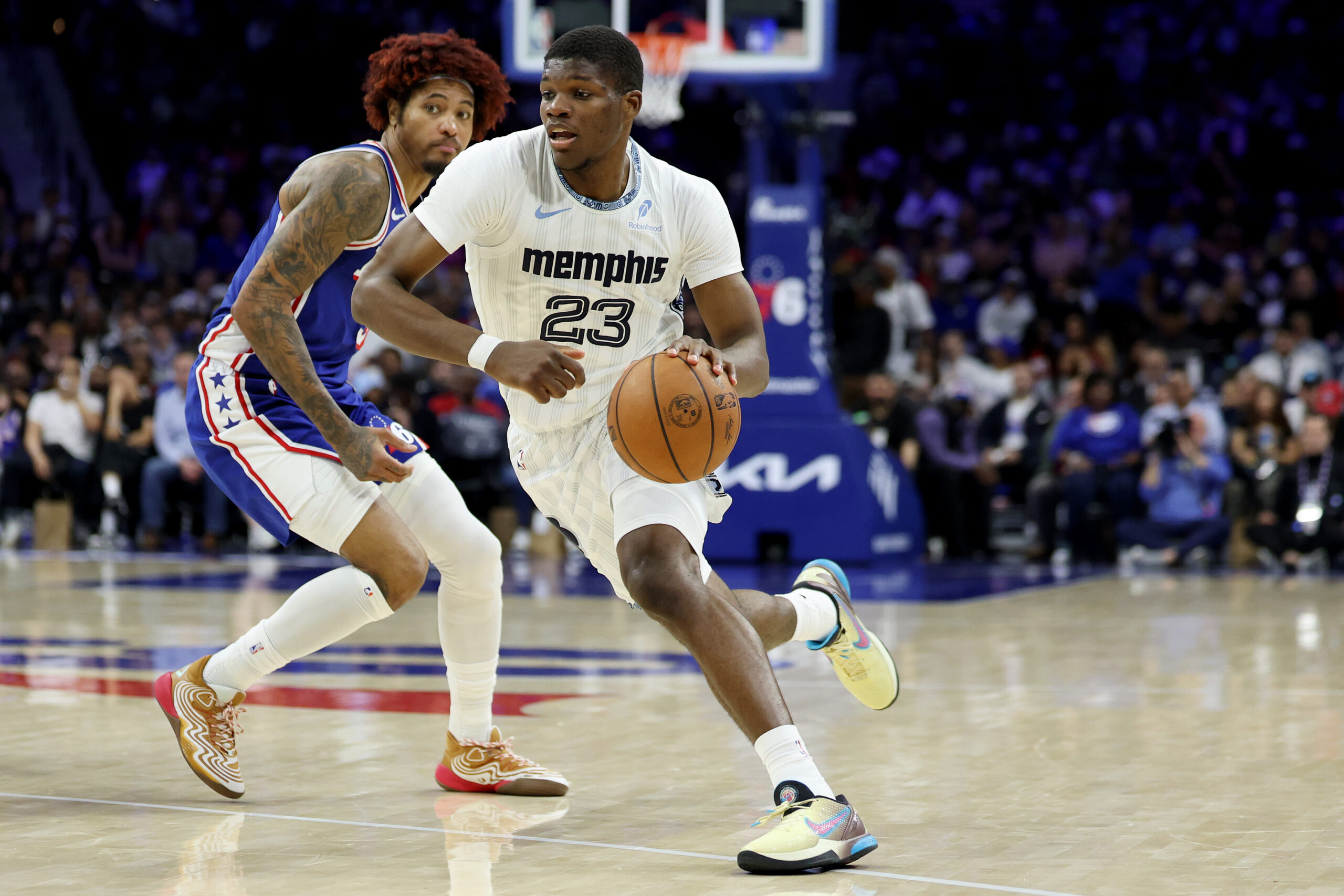
The smile camouflaged Cedric Coward’s pain. Coward’s stoic tone revealed his grief.
Memphis Grizzlies forward Brandon Clarke died unexpectedly last week at age 29, leaving Coward and other members of the Grizzlies franchise struggling to cope with such a tragedy. Yet, Coward has also reminded himself about the need to stay resilient, just as Clarke did when he managed various injuries in recent years to his left Achilles tendon (2023) and right knee (2025).
Hence, Coward visited the Los Angeles Lakers’ practice facility in El Segundo, Calif., this week to watch his agency (Life Sports Agency) host a pre-draft workout for their clients before various NBA executives and scouts. Then, Coward talked with R.org about what Clarke meant to him and how he wants to honor him. Coward also delved into other topics. He defended Ja Morant as a leader. He shared how Kevin Durant has mentored him. He detailed his growth as a rookie as the Grizzlies’ No. 11 pick. He opined on what it will take for the Grizzlies to become a playoff contender again.
Editor’s note: The following one-on-one interview has been edited and condensed.
Interview with Cedric Coward
– I’m sorry about the news with Brandon’s passing. How have you been holding up with everything?
Coward: “I appreciate it. It’s been rough. But at the same time, I’m grateful for the time that I had with him. Now you honor his memory by winning games and doing what he was doing with being a great teammate.”
– What made Brandon such a great teammate?
Coward: “I only had a year with him. But at the same time, it was so impactful due to his love for his teammates. Especially for me as a rookie, he had a lot of love for me. He didn’t treat me like the stereotypical vet, giving me the typical rookie treatment. He did at times, but it was all fun and love. So with him, I thought it was so inspirational that he dealt with so many injuries, but he came in every day with a smile on his face. He came in every day with the same great attitude. He never treated anybody any differently. He never let anybody see that he was in a bad mood because of that. It helped me when I got hurt to do the exact same thing.”
– What perspective did he share with you about handling injuries?
Coward: “The biggest thing that he told me is, ‘It’s bigger than you.’ Your job, my job or anybody’s job is just to get back and get as healthy as possible. But at the end of the day, the world doesn’t revolve around you and that one injury. The world revolves around the team. The injury is just a part of it. So all you have to do is make sure that you’re doing what you can to get back healthy.”
– With how you said Brandon treated you well but occasionally gave the rookie treatment, what examples come to mind?
Coward: “It was crazy. The biggest one was in Media Day. He just skipped me in line. That was that vet work. I just had to wait a little bit longer. But that isn’t a problem (laughs).”
– In the spirit of you wanting to honor Brandon’s memory by winning games, how do you go about that?
Coward: “It’s about doing what we can to get better each and every day. He was super impactful, especially during the times that the Grizzlies made the playoffs. So it’s about getting back there. Getting back to the playoffs is huge. It’s also about not taking every day for granted. That’s the biggest thing. You have to understand that time is short, not just for the people that you’re with, but for the time that you have in basketball. Anything can happen. Obviously, the most tragic thing happened with Brandon. But at the same time, injuries or contract situations are other parts. There are a whole bunch of things that can happen. So you have to take that into account. Since all of these things can happen, you really have to make sure that you’re doing what you can to maximize every moment that you’re on the court.”
– What did you do to maximize the rookie season that you had, even amid the losing, injuries, and Jaren Jackson Jr’s trade?
Coward: “I made the most of my opportunity. My teammates, coaches, and staff had the utmost confidence in me. That gave me the utmost confidence in myself. I always tell myself that it’s just basketball. I’m probably one of the most competitive people that you’ll ever meet. But at the same time, in order to calm nerves and calm down in big moments, I tell myself that it’s just basketball. It’s a game that I’ve been playing since I was four. So it is what it is. Ultimately for me, I think the opportunity that you’re given, you have to take advantage of it. I had a lot of confidence given to me from my teammates and everybody in the organization. So that helped me play better.”
– What things do you do to fuel your competitive chip while staying calm?
Coward: “To be honest with you, I don’t know if it’s part of my routine. It’s just who I am. I never want to lose. I never want to be second or third in anything. Anything after that is even worse. I always take into account that the competitiveness has to come from somewhere in you. It’s not taught. You can’t teach competitiveness. You can’t teach effort. It’s something that you have to be bred with. That’s something that I believe I’m bred with, and it isn’t going to leave.”
– You worked on your grandfather’s house. You also played for different schools after not having any scholarship offers (Williamette, Eastern Washington, Washington State). How did those experiences shape you?
Coward: “It was huge. It allowed me to understand how hard it is to get to this moment. It allowed me to have the hunger to know that I never want to go back to that. No disrespect to anybody that is in that. But at the same time, I got out of it. I never want to go back. I always want to go forward. It’s a precious thing for me to be where I am now. I’m super grateful. But at the same time, I always tell people that the easy part is making it, and the harder part is staying in it. That’s my goal.”
– Can you paint a picture on what it was like working with your grandfather on the home for a summer?
Coward: “Imagine waking up at 7:30 am and driving 30 minutes to get somewhere by 8. After that, you’re working from 8 am to 5 pm doing whatever needed to be done. Whether that’s laying down foundation, chopping wood, building cement or painting the house. It was hard work. But at the same time, he taught me a lot. If I can do this, working out two times a day is easy. Playing in a game is easy. So for me, it’s pretty light work compared to what I’m doing now.”
– What did it take to have the physical and mental stamina to do that every single day?
Coward: “I knew that my Grandpa needed me. So that gave me some motivation. I also knew that I was learning valuable life skills. I use my hands a lot. I build stuff out of boredom. I build Lego’s. I’ve built some cabinets for my closet. That’s what I do from the valuable skills that I’ve learned with him. That’s something that I didn’t even notice until I looked back on it. There were those times where I was like, ‘Damn, I don’t want to get up and work on this house today.’ But four or five years later, I’m building cabinets in our closets. I know exactly how to do it. I don’t need any direction.”
– What Lego sets have you built?
Coward: “A lot of flowers. My girlfriend loves flowers. I told her that these Lego flowers will last a lot longer than real flowers (laughs).”
– What do you think you showed that warrants being on an NBA All-Rookie team (Interview took place before NBA announced results on Wednesday evening. Coward made the NBA’s All-Rookie First Team)
Coward: “I’m not the one that makes those decisions. But for me, it’s not as important as it may seem. It would obviously be a blessing. I would be grateful to get it. But at the end of the day, I would just tell people to watch the tape. I had ups and downs as a rookie. But I think the ups were really ups. The downs weren’t as down as they may seem. That’s every NBA player. You’re going to have good games and bad games. But I think the impact that I made on the floor, I was trying to win every game and I was positive in some metrics. That’s not my decision. I just tell people to watch the tape.”
– You had the team’s best efficiency rating for anyone that played at least 300 minutes. What went into that?
Coward: “I was trying to help the team win. I was trying to help the team do as well as possible. That’s it.”
– You’re not getting direct comparisons to Kawhi [Leonard] or J-Dub [Jalen Williams]. But some note similarities to your shooting mechanics and how you defend. How have you tried to emulate what they do into your game?
Coward: “It’s always great to be compared to great players. Kawhi is going to be a Hall-of-Famer. Before the injuries this year, J-Dub was All-NBA and was on an All-NBA Defensive team. But there’s only one of each. There’s only one Kawhi. There’s only one J-Dub. There’s only one me. But at the same time, a lot of people will tell you that it’s a copycat league. You have to be a copycat of the guys that have done great before. So for me, I always look at it. If those are the comparisons, I can use those as examples. I look at what they do on how they’re successful and just incorporate them into my game.”
– You’ve said you want to work out with Kawhi. Have you gotten a workout with him yet?
Coward: “Not yet. But it’ll happen. It’ll happen eventually. I’m not in a rush.”
– You’ve also said you hope to ask questions to some of the other star vets, including LeBron [James], Steph [Curry] and KD. Have you been able to do that yet?
Coward: “Yeah, I’ve talked to KD a lot. After games, I talk to him a lot. I haven’t talked to ‘Bron or Steph yet. But the opportunities will come. I was born believing that closed mouths don’t get fed. So whenever I get those opportunities, best believe that I’m going to talk a lot to them about it. But at the end of the day, it’ll all come in due time.”
– What has KD’s messages been?
Coward: “Honestly, just keep going, no matter what happens. No matter if you have frustrations with losing, good games or bad games, the work will show above everything. For him, as one of these greats in this game, his love of basketball has carried him so much further than people think. As soon as you fall out of love with the game, that’s when you start falling down. But his love of the game matches mine. So I always remind myself never to lose love and never lose care for it. Honestly, just keep putting in the work.”
– What was it like handling their tests on the court?
Coward: “Oh, man. It’s one of the most surreal things. But once you step into the four lines, it’s basketball. Best believe that it is one of those things where I’m thinking, ‘I get to guard LeBron, Steph and KD.’ But once you step in the lines, I think, ‘It’s basketball. Let’s get it going.’ They’re trying to take away my goal from winning. There isn’t any ‘star-struck stuff’ anymore. After the game, I can be back to thinking, ‘Oh my gosh! It’s KD!’ But at the end of the day, it’s basketball. They’re trying to take away my goal of winning the game. For me, I try to do my best not to let that happen.”
– What did they do to test you?
Coward: “Steph doesn’t stop moving. He’s one of the hardest people to guard because he doesn’t stop moving. Plus, he’s really strong. He knows how to create space. LeBron’s mind for the game is absolutely insane. He knew almost everything we were doing defensively. His most deadly thing, besides his size and scoring ability, is his passing. KD, in my opinion, is a top-three scorer of all time. You have to make him shoot whatever is not comfortable for him. That isn’t many shots. But everybody has given me a test this year in certain ways. I’ve won battles. I’ve lost battles. But at the same time, I just have to keep going. Kawhi’s mid-range game is insane. It got to a point one game where he didn’t miss. You were thinking, ‘Just don’t let him touch the ball.’ He works hard. That’s what shows.”
– You’ve defended Ja quite a bit. What is the public getting wrong about him?
Coward: “I don’t understand how you can talk about somebody when you’re not spending every day with him. For me, I get it. You have the media representation and whatever the media says about him from past events. But at the end of the day, people learn and grow. One thing that he has done is that he hasn’t made the same mistake twice. Obviously, there was the [gun] incident in 2022. He hasn’t made the same mistake twice. But people still look at him the same. That’s ridiculous, in my eyes. But he’s one of the best people that I know personally.
I told my family that he’s one of the people that you could invite to the cookout. He would just come, chill and hang out. That’s the type of person he is. He wants to take care of you and everybody around him. He has a genuine heart like that. During an ice storm, he even offered to pay for my groceries. I declined it. But the fact that he said that was huge. He really cares about his rookies and his teammates.”
– Why did you decline the offer?
Coward: “I didn’t want to take advantage of that. It was a great offer, though. I appreciate it.”
– Many also reacted strongly to Ja’s disagreements with Tumoas [Iisalo] and his one-game suspension after that.
Coward: “At the end of the day, those are questions that you have to ask him. But what I know of him, he’s one of the greatest people.”
– A lot of his other teammates have talked about Ja as a great leader for how he is with teammates and his competitiveness. How did he show that to you on the court?
Coward: “He showed me different things in the game that I can take advantage of that can help him. He provides the most gravity on the court when he’s playing. So for me, it’s about being in the right spots offensively and defensively. I remember one day, I grabbed the ball and they took it out and passed to me. I looked for him. He came up to me and said, ‘Why don’t you dribble the ball up?’ I was like, ‘Yeah, I got you.’ It’s certain things like that where he’s making sure he can make the game easier on both of us. At the end of the day, if we’re successful, then we can help the team be successful. Then if the team is successful, we win games.”
– Why is it important for you to play in Summer League again this year?
Coward: “One, I want to keep growing my game. Two, I want to let the team know that no matter what I got to do, whether it’s play in Summer League or in training camp, I’m going to be there to do it. It’s something that they wanted me to do. It’s something that I didn’t have any problem doing. For me, it allows me to maximize my game, too, and work on things that I didn’t do as much this past season. I’ve been working on that this summer. Also, I’m trying to win. It’s the competitiveness.”
– What are you trying to do to improve your game?
Coward: “The biggest thing is my handle and showing that I’m a primary ball handler. I have it. But we had a lot of point guards last year. So I wasn’t able to show quite as much. But at the end of the day, that is something that I’ve been working on. Then it’s also about making the game a lot simpler. Last year, there were times where I made the game tougher than it needed to be. Every player has go-to moves and things they can get to where it’s really simple. So I’m making sure to do that, I’m making the game easier.
Defensively, I’ve been doing a lot of work to make sure that I can get through ball screens, handle one-on-one defending and staying in the gaps and closeouts. It’s about whatever can help me become a better player, offensively or defensively. Or even just watching the game. If I’m on the bench and call out on certain things, we’ve been doing that.”
– Where do you all go from here with dealing with the uncertainty of any off-season roster moves and getting back to the playoffs?
Coward: “That’s mainly a question you can ask our front office. They move the pieces. But as a player, I can only speak for myself. It’s about helping not only myself and the team to get into positions that we need to get into with building habits and culture to get back there. The teams that are most successful now are younger teams with the Spurs and Thunder. Those are teams that have great camaraderie and they have a culture where it’s built. Obviously, it helps when you have the MVP [Shai Gilgeous-Alexander] and you also got Wemby [Victor Wembanyama]. But at the same time, who’s to say that we can’t have one of those players, too?
For guys, it should everybody’s individual goal to maximize their potential and maximize what they can be good at. But at the same time, as a team, you build that culture and camaraderie, it helps take care of a lot of things. A lot of people shy away from the work. I’m not one of those people. We’re not going to be one of those teams.”