
“Being Physical Became Really Important”: How Dagenais Emerged as Power Forward for 2026 NHL Draft
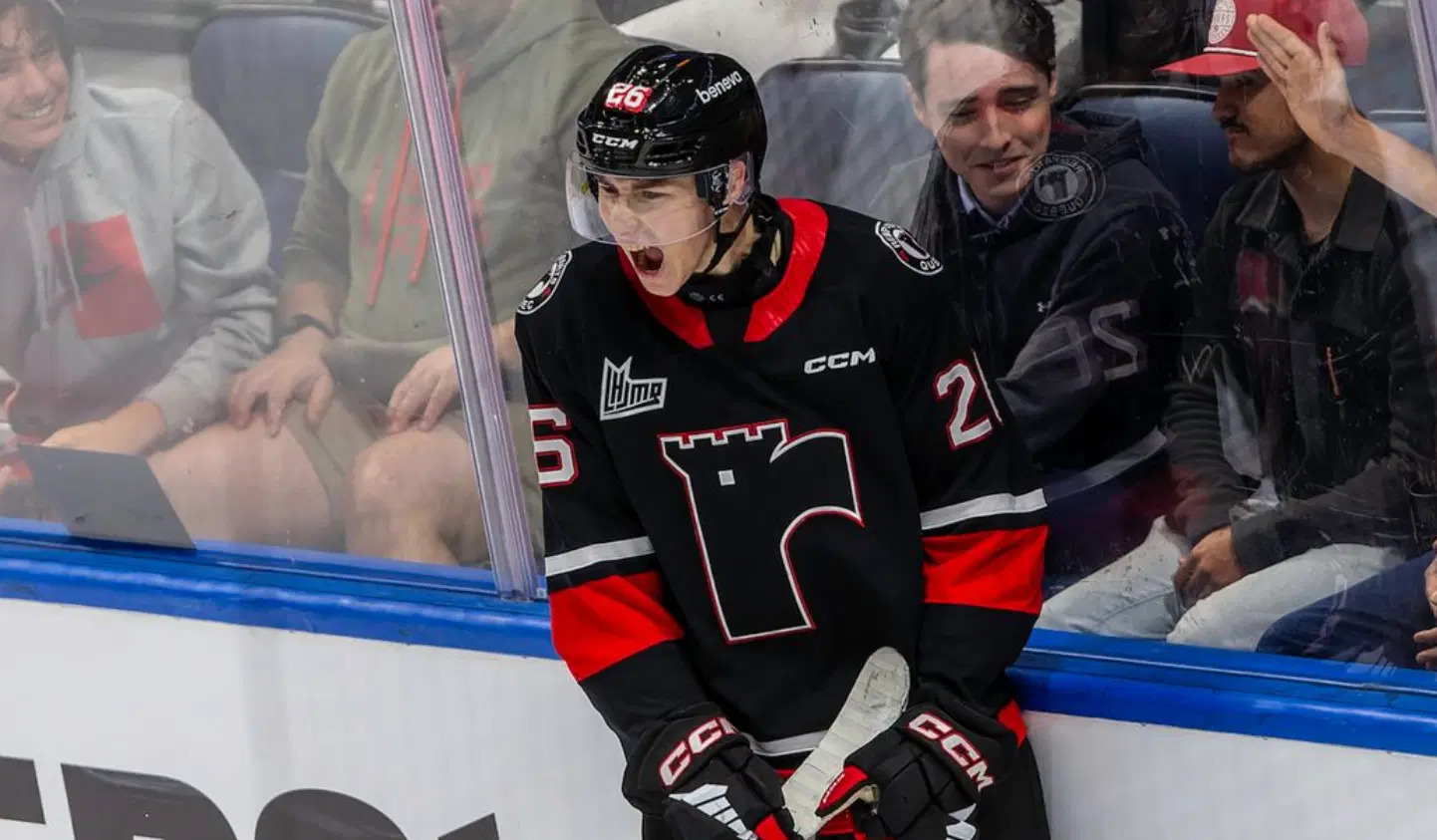
Maddox Dagenais can pinpoint the moment everything shifted.
Early in the season, the 2026 NHL Draft prospect was caught in the noise, juggling rankings, expectations, and the presence of scouts in the stands. For a player already carrying weight as a former QMJHL first overall pick and the son of ex-NHLer Pierre Dagenais, it was easy to drift away from the habits that made him effective.
“I think I was thinking too much about the draft, about the people watching,” Dagenais said. “I just went back to having fun, playing hockey like I always have. Enjoying being at the rink every day. That’s what flipped the switch for me.”
That reset did more than steady his game. It unlocked it. What followed was a clear second-half surge that reshaped both his production and his identity, turning him from a skilled prospect into one of the more intriguing power forward options in the 2026 class.
The Turning Point: From Thinking to Attacking
Dagenais’ season is best understood in two halves, with the shift coming during the showcase circuit. The QMJHL Prospects Game planted the seed, but it was the CHL Prospects Game where things truly clicked.
“I knew there were a lot of good players and I might not get the same minutes,” he said. “So every shift, I wanted to create something.”
That mindset forced a simplification: Less thinking, more doing. Instead of waiting for plays to develop, he began driving them.
Instead of leaning on skill alone, he started imposing himself physically.
“I wasn’t very physical at the start of the year,” he admitted. “But after that, it became really important for me. And since then, I haven’t stopped.”
That added edge did not just make him harder to play against; it made him more consistent. Shift-to-shift engagement became a defining trait, and with it came a noticeable jump in pace and overall impact.
The confidence followed.
“It starts with believing in your skating,” Dagenais said. “If you think you can beat guys, you attack differently. When you trust your skating, you can try to beat defenders instead of just making a safe play.”
That belief shows most clearly in transition. With speed and possession, he forces defenders onto their heels, opening space and driving offense. It is a style he models after bigger NHL forwards like Tage Thompson and Juraj Slafkovský, players who combine reach, skill, and power with the ability to attack off the rush.
Growing Into a Power Forward and Handling the Spotlight
The evolution of Dagenais’ game happened under the pressure of being a top pick in Quebec, a high-end draft prospect, and the son of a former NHL player, which ensures that.
But he flipped the script on that this season.
“My dad helps me a lot with those things, tournaments and big games,” he said. “But it’s really about competing every shift and giving everything for your team.”
That approach has helped him navigate a season filled with attention, including a steady climb up draft rankings.
“No matter what line you’re on, it’s about showing your will and determination on every shift” he added.
The 6-foot-4, 196-pound 18-year-old was able to round out a strong draft-eligible season, notching 30 goals and 62 points in 62 games.
Still, despite the strong second half of his season, he is careful not to let the hype become a distraction again.
“It’s nice to see the work pay off,” he said. “But I’m not trying to focus on that right now. I still have a ton of training again for the draft. I don’t want to stop working toward my goal and staying laser focused is important for me.”
The work of creating his new power-forward identity began on the ice, but it continues off it.
After transitioning to the wing full-time this season, despite being listed as a centre, Dagenais found the qualities in his game were able to better shine through.
“I played almost the whole year on the wing. As a big player, it’s easier on the wing,” he said. “You can protect the puck more, play along the boards and lean into guys on the forecheck to create turnovers.”
At the same time, he values the versatility of being able to play both positions.
“Being able to play both positions is important. At the next level, you don’t know where you’ll play. It’s just another tool.”
But being a power forward in the NHL requires more than just size. Dagenais realizes that there needed to be a stylistic shift in which he would be asked to play a more physical, high-tempo game.
And when you combine size, skill, physicality, and a newfound motor, well, that’s a recipe for eventful hockey.
“At the start of a game, I try to hit someone to get into it and get my juices flowing. It’s become part of my game, just trying to play with consistent effort and pace every shift,” he said. “It creates opportunities for me and my teammates and I feel I have the skill to take advantage of those opportunities to feed my teammates or take advantage of soft ice.”
What Comes Next
With the NHL Combine in Buffalo approaching and the draft getting closer, Dagenais remains focused on development over projection, a mindset shaped by the lessons he learned earlier this season.
Asked what he wants to improve this summer, he kept it simple.
“Everything,” he said, before narrowing it down. “But especially my strength. I’m tall, but I’m not the heaviest yet. If I can add more mass and grow into my body I can really lean into my style of play.”
It is the logical next step, as the foundation is already there. Size, skating, skill, and now a consistently engaged physical presence. Added strength would only amplify it, making his power game even more effective and his overall impact harder to contain.
It’s the main reason why he’s shot up draft rankings in the spring, with many viewing him as a surefire 1st-round pick in the 2026 NHL Draft. Even NHL Central Scouting ranked him as the top QMJHL prospect and 15th overall North America as a whole.
And, despite it being a reward for his efforts this season, it’s all noise to the younger Dagenais.
“There are a lot of lists, but I don’t really look at them,” said Maddox. “I’m just focused on getting better and evolving as a player. If scouts and other people enjoy what they’re seeing, it’s flattering, but my focus is about getting better every day.”
For a player whose season turned on rediscovering simplicity and confidence, the trajectory is becoming clear. Dagenais is not just rising because of production; he is rising because he has figured out how he needs to play.
And now that he has, he has not looked back.