
“I Don’t Think I’ve Ever Gotten Out of That Deep Hole”: Troy Townsend Opens up in Exclusive Interview
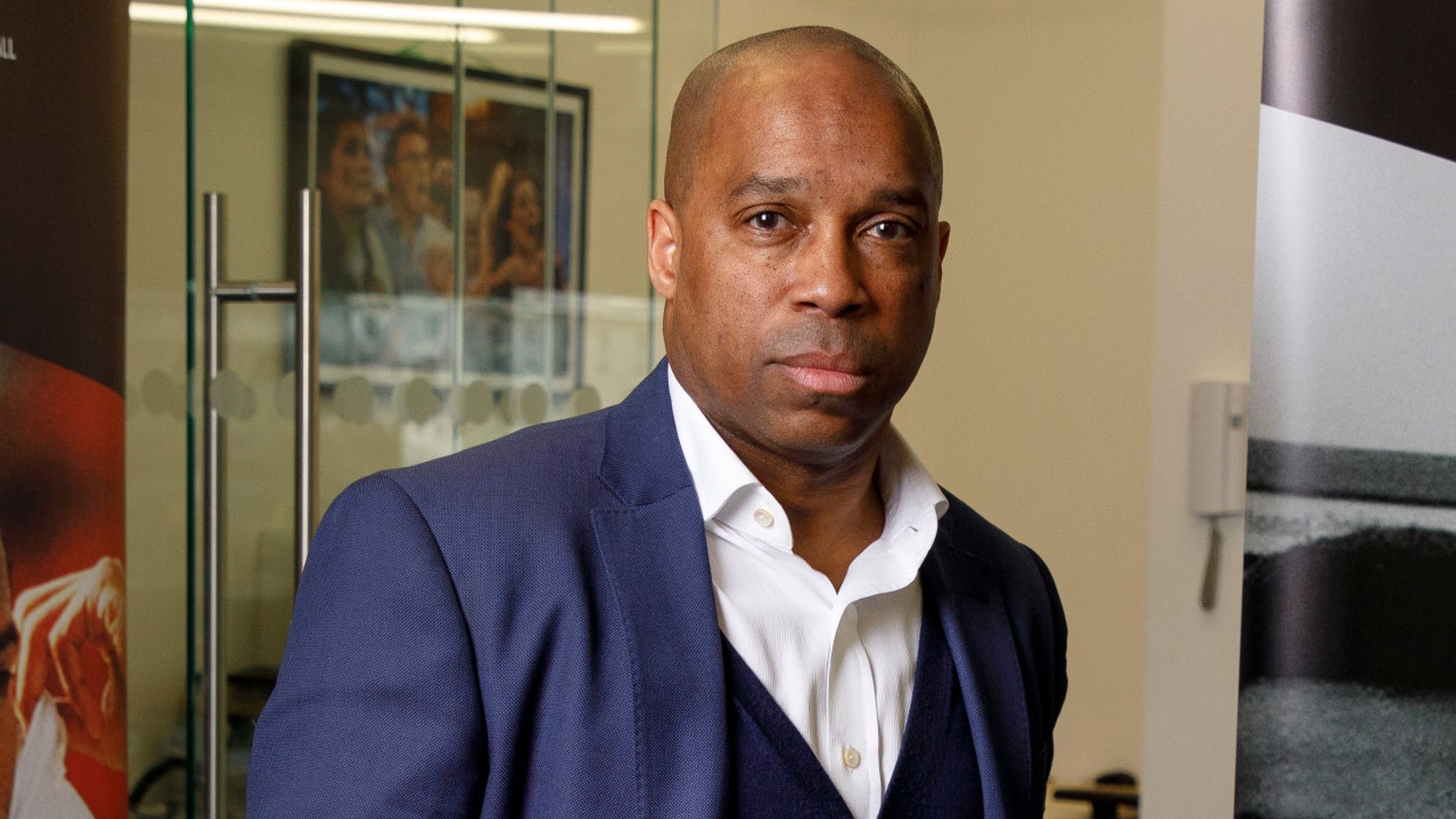
He may never have played football at a professional level like his son and nephew, but Troy Townsend has left an outsized legacy on not just English football but the global game. Born on August 1, 1965, Townsend was obsessed with football from the very start and began playing alongside future English legend Teddy Sheringham in a strike partnership for amateur side Beaumont, before trying his luck with Crystal Palace and Millwall’s youth facilities. But while he desperately wanted to remain connected in football, he was keenly aware that he wasn’t quite good enough to make a playing career at the top level of the game. It’s why he decided to start chasing his coaching badges at 19 years of age.
“As a part-time coach, I wasn’t earning a lot of money. There was a lot of responsibility on my partner, because when you’re a part-time coach, you’re also coaching unsociable hours as well; it’s not a 9-to-5. The work starts literally when the kids come out of school and then continues until whatever time in the evening,” stated Townsend in an exclusive R.org Interview. “Because of my involvement in the game, I could see that there was a love of the game as well through my sons, and I developed my love of the game. But the sacrifice was that I probably wasn’t as involved in my own children’s development as I should have been, and would have liked to have been.”
“That’s because I was finding my way, and when I was at home, they were at school. The trade-off was that I would go and coach later on, starting with after-school clubs, and then getting involved myself in developing my own structure around the game. But I’ve got to be honest here: I think a lot of the younger coaches of my period will realize that it was a neglect of my own family, missing out on quite a lot that they would have done after school, and quite a lot of genuine family time when everyone should be at home. And yet, obviously, I’m out coaching and hoping that I can develop into someone who actually would benefit their future as well.”
Townsend pursued a career in coaching, overseeing all the university teams at Middlesex University and taking charge of youth outfit Redwood FC. As a result, he often wasn’t able to commit his full attention to his six children – the eldest of which, Kurtis, had come from his previous relationship. As a result of their break-up, Troy wasn’t able to spend much time with Kurtis until his teenage years, when he finally reconnected with a football-crazed young boy. At the time, Troy was running his own company ‘Ultimate Sports’ alongside his business partner Steve Browne, providing East London schools with Physical Education teachers and after-school programming as well as managing non-league side Cheshunt FC. So when Kurtis was released from Wimbledon’s academy, Troy had no reservations about bringing him to his club. Every matchday, Kurtis would drive to his father’s house before making the journey to a local cafe for a pre-match meal and then heading to Cheshunt’s stadium.
Recovering from Tragedy
Cheshunt’s players would usually congregate on a bus for away matches, but on December 15, 2001, they were so certain that their trip to Barton Rovers in Bedfordshire would be called off due to freezing temperatures that they didn’t arrange transportation. Instead, when the pitch inspectors announced at the 11th hour that the match would indeed take place, every player would drive to the ground. Every single player showed up, everyone but Kurtis. When the final whistle blew, Troy entered the changing room and was told he needed to go to the hospital. It was here that he was greeted by a police officer, who told him the words that have haunted him for the past quarter-century: Kurtis was involved in a car accident on the way to the match. Out of the four players in the car, two of them suffered career-ending injuries. But as for Kurtis, he lost his life at 18 years of age.
“I don’t think I’ve ever gotten out of that deep hole. I’ll be honest with you, the impact of it was that I thought that I was finished with football, because it was football that took his life away. I wasn’t sure about whether I was strong enough mentally and emotionally to get back into the game and deal with the struggles of that day.
He was only 18, he was a beautiful boy and a great footballer who had fallen on a little bit of hard times after being released from Wimbledon. He came into my environment at Cheshunt with the purpose of getting his confidence back and understanding the ability that he had, for the reason why he was in an academy, and to get himself back up the ladder.”
“As such, the emotion around it is that every time I was looking at a football pitch or a football game, I wanted to see Kurt, you know? Every time I was out there coaching, I couldn’t get the images out of my mind. The reason why I say I never got out of it is that I still have dark periods now, I still have the periods where he’s my first thought, and being involved in the game, somehow I know that Kurt would have developed from a player to a coach himself.
He was already working for me as well; he was teaching in schools, and I think he just had that kind of mannerism and character to follow the pathway. But unfortunately, it didn’t materialize. I struggled with my mental health, I struggled to forge connections with other people, and it took a really long time. If it wasn’t for my business partner and my family around me, I don’t know where I would be, to be totally honest. I have to be grateful, although I’ll obviously never forget that period of time and the period of time since.”
Somehow, someway, Townsend found the strength to fall back in love with coaching. He bounced around from various teams like Slough Town, Boreham Wood, Dover Athletic, and Leyton FC. But deep down, he always knew that he didn’t just want to develop his coaching methodology; he also wanted to make a positive impact in society. It’s why, in 2011, he joined Kick It Out, British football’s anti-racism campaign, where he tirelessly strived to promote inclusion and challenge discrimination across the game and beyond. Whilst his son Andros Townsend established himself as a key player for Premier League sides like Tottenham Hotspur and Crystal Palace in addition to representing the England national team, Troy would make his mark in a different manner by going from a part-time volunteer to one of Kick It Out’s most important figures.
In addition to working as a freelance sports analyst as well as ushering in the next crop of East London footballers with S&T Academy (later incorporated into Redbridge FC’s U17s), Townsend was able to make a genuine impact at Kick It Out. He delivered educational workshops to Premier League Academy players and Football League Scholars ranging from 9-23 years, as well as coaching staff and parents, where he raised awareness of equality and diversity with football club environments, changing room culture, and the effects of banter. Such was the impact of his anti-racism work that in 2013, he was selected as one of The FA’s 150 Grassroots Heroes. Townsend visited Buckingham Palace to receive his award from Prince William, the Duke of Cambridge, whilst also receiving two awards from The Football Blacklist, which celebrates the contributions of black people working in football.
Blazing the Trail at Kick It Out
Townsend enjoyed considerable success as Kick It Out’s Head of Player Engagement, pioneering the Raise Your Game program to help young people from diverse backgrounds get their break in the football industry, and working directly with victims of racist abuse, from superstars like Romelu Lukaku to completely unknown kids. He also served as a patron of Football Beyond Borders in addition to launching “It Was All A Dream, the Football Academy Journey,” audio documentary into the English Academy system, which was shortlisted at the SJA Awards. And at the end of 2023, Townsend was appointed Member of the Order of the British Empire (MBE) in the 2024 New Year Honors for services to diversity and inclusion in association football. Six months later, Townsend decided to call it quits on Kick It Out after 13 years with the anti-discrimination charity.
“First of all, I left because the work was draining. And I’ll be honest with you, when I say draining, I mean personally having an impact on me and my well-being. I was at everyone else’s beck and call at any stage of the night or day, and I’m not quite sure the same was bestowed on me. I think I had served my time, and the organization was changing as well.
We’d lost our founder, Lord Herman Ouseley, who was one of the pivotal persons in the fight against racism. I felt over the last year that maybe it was my time. I had done so much for other people, maybe it’s time to look after myself, maybe it’s time to do things slightly differently, or do something slightly different. I didn’t know what that was, I didn’t know what I was going to do, but one of the things I did want to keep doing was educating young people in the sport, and I’m still managing to do that.”
“There were many things that I weighed up in my mind, but 13 years in this business and doing what I do is a hard slog. There were many nights when you thought, ‘Oh, it’s time to go home, you shut the door at home, and then the phone rings. How do you ignore a call when you’re a support system?’ I think the organization was changing and moving away from what I knew when I started in the organization for a long period of time. They were going down a different direction, and that’s perfectly fine for me, but it was a direction that I wasn’t prepared to follow.”
Townsend has spent the past two years working as a freelance consultant for Middlesbrough Academy and Liverpool FC Foundation in addition to serving as a guest contributor for The Guardian, as well as working as a special advisor to Nujum Sports, a non-profit organization that describes itself as the representative body for Muslim athletes in the United Kingdom. But while he is undoubtedly proud of his impact with Kick It Out, he acknowledges that as far as a potential reunion is concerned, that ship has sailed.
“I can’t see it happening. I’ve done my time, I’ve served my purpose, I’m not really au fait with the way that the organization deals with things, so I would be running into a structure that I actually don’t agree with. I prefer the downtime, I prefer to work at my leisure, I prefer to organize my diary in the way that I like it. I’m not getting any younger, and the work, as far as I’m concerned, is getting harder. That’s not me running away from the work, that’s just saying that I’ve had an extended period of time in the system. I don’t need to be going back unless… we should always leave the door half-cracked open…unless football decides that, ‘Yeah, this is it now, we’re going to really tackle and challenge what we’re seeing, what we’re hearing, what we’re reading. If football really is going to tackle it in a way that sends messages that are strong and powerful, I’m all down for that, I’ll be the first in line. I’d want to be a part of this because it would seem like, ‘Finally, you’re acting, not reacting, you know? I’m not sure that will happen in my lifetime, but you never know, so we always leave that crack in the door.”